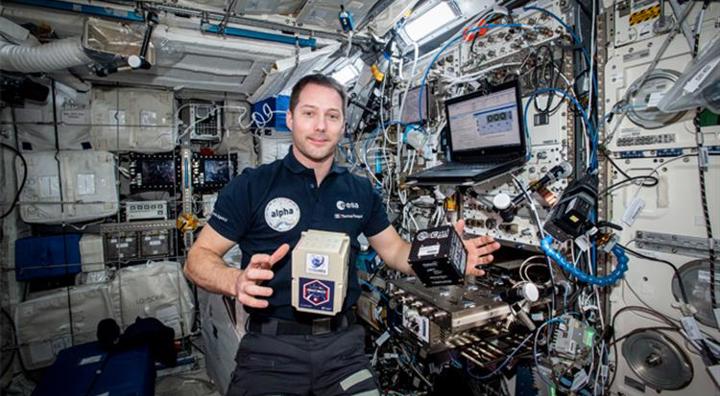
OSCAR-QUBE (2020-2022)
OSCAR-QUBE is one of the key iterations of the OSCAR projects, resulting in the first-ever demonstration of quantum magnetometers in low Earth orbit.
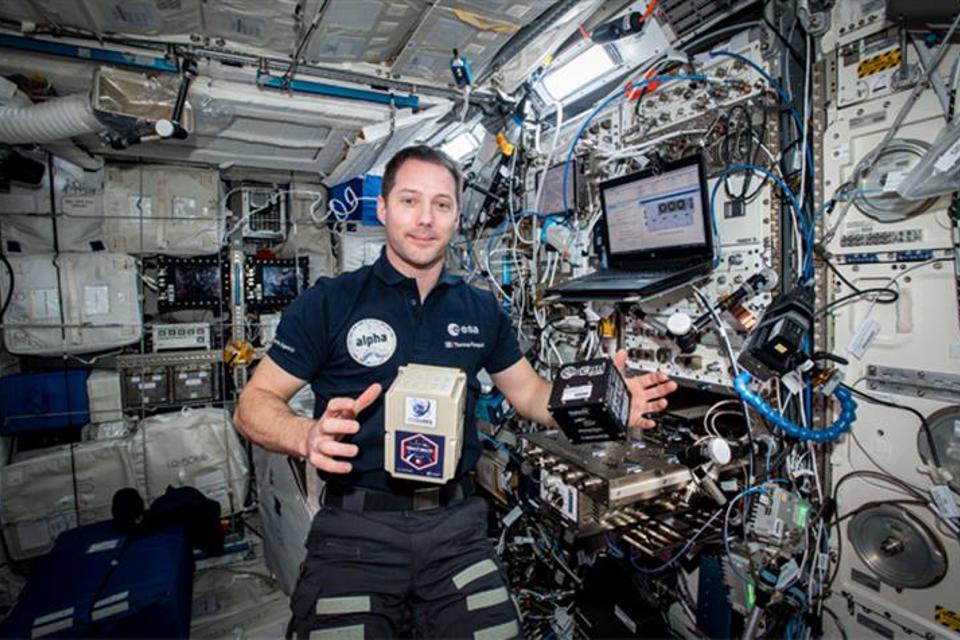
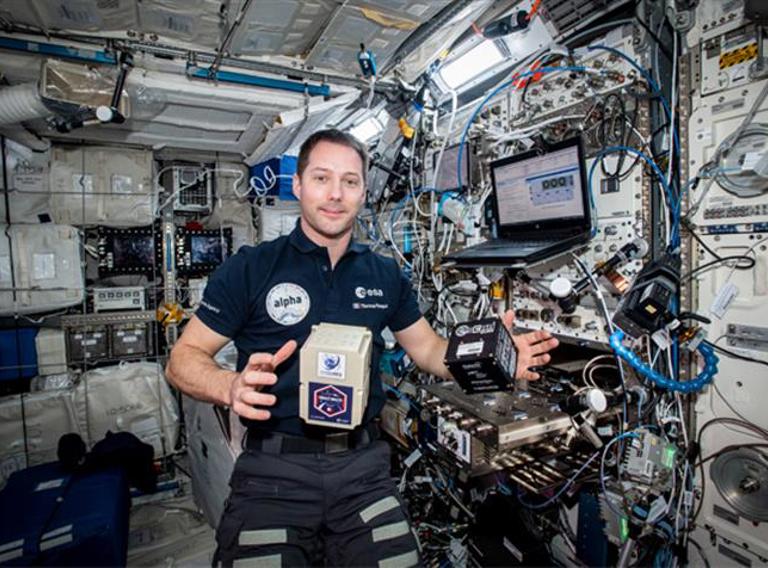
OSCAR-QUBE (2020-2022)
About the project
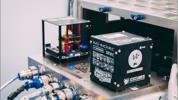
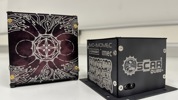
OSCAR-QUBE, OSCAR QUantum BElgium, is the first cube-looking sensor and the third iteration of the team (to the power of 3 in math = cubing). After being selected in April 2020, the project achieved a remarkably swift turnaround, delivering its flight hardware just one year later in April 2021 before launching in August 2021, operating for roughly ten months through 2022, and ultimately returning to UHasselt later that year.
OSCAR-QUBE was no longer a short balloon prototype. It was a complete, crew-safe, qualified instrument subjected to:
- vibrations
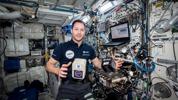
- EMI/EMC testing (electromagnetic interference / electromagnetic compatibility): this ensures an instrument does not leak dangerous radio interference into the space station while proving the device can withstand the station’s own intense electronic environment. Because OSCAR-QUBE operated inside a pressurized module alongside astronauts, it had to clear a rigid matrix of aerospace safety rules dictate by NASA and the European Space Agency (ESA) before it was allowed anywhere near a rocket or astronaut.
- functional and ISS safety testing
- thermal vacuum testing
It also combined optical and photoelectric readout in a single platform. It was the first time this type of technology was used in space (according to reports).
Goals
OSCAR team wanted to demonstrate that a fully integrated diamond quantum magnetometer could operate reliably for months in orbit. The minimal expectation was simply for the QUBE to survive the intense structural vibrations of a rocket launch and remain operational in a microgravity environment without its custom electronics short-circuiting. After that, it was expected to operate for only a few months but ended up measuring for over 10 months!
Results
The sensor operated for about ten months aboard the ISS. It collected approximately 231 GB of data and achieved a measured sensitivity below 300 nT/√Hz, with a reported bandwidth of about 1.3 kHz. It produced in-situ vector maps of Earth’s magnetic field. The measurements showed good agreement with expected low-Earth-orbit geomagnetic behaviour after accounting for the locally disturbed magnetic environment inside the ISS.